Cat Cute Tiles: Piano Games
- 4.6
- Rating
- 5.00M
- Installs
- Free
- Price

 Analysis by App-foxy
I went into Cat Cute Tiles: Piano Games expecting a lightweight music game built around charming cats, and that is exactly where it works best. It is not trying to replace a serious piano-learning tool or a deep rhythm simulator. Instead, it turns familiar musical tapping into a bright, easy-to-start experience that feels comfortable for short sessions. My overall view is simple: this is a good choice when you want a playful rhythm game with a cute presentation, but it is less convincing if you need precise musical training, a large amount of long-term depth, or a completely distraction-free interface.
The game comes from Cobby Labs and sits in the music category. It is free to play and carries an Everyone age rating, which makes it an approachable option for families, casual players, and anyone who prefers games that can be understood almost immediately. The central idea is to tap tiles in time with songs while enjoying a cat-themed visual style. That familiar format gives the game an important advantage: I did not need a tutorial-heavy introduction before I could start playing.
Why the cat-themed rhythm format works
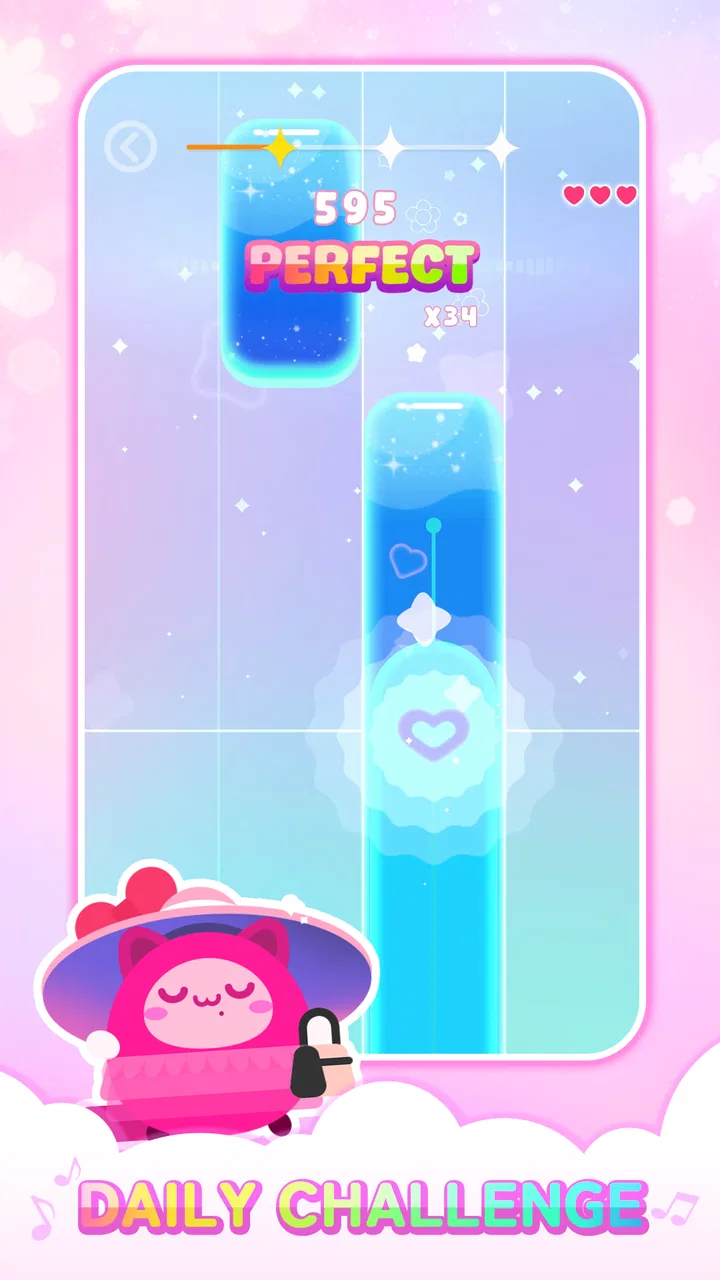
The strongest part of the experience is the way the visual theme makes a well-known game structure feel more inviting. Rhythm tile games can easily look interchangeable, especially when they rely on the same basic movement of tapping notes as they appear. Here, the cats give the presentation a softer personality. The result feels less like a test of reflexes and more like a quick musical toy I can open when I have a few spare minutes.
You May Also Like

 Blood Strike: 2.5 Anniversary
Blood Strike’s Loadouts Turn Every Drop Into a Tactical Gamble
A close look at Blood Strike’s custom loadouts: how fast access to signature weapons reshapes its battle royale rhythm, rewards preparation, and narrows the gap between fights.

 Pandora - Music & Podcasts
Pandora’s Music Is Easy to Start, but Harder to Recover
Pandora’s strength is its low-effort path from a seed to a station. Its weak spot is how much confidence it asks you to place in connection, setup, and quiet recovery.

 8 Ball Pool
 Is Built on Rivalries, Rematches, and Routine
A close look at the rivalries, rematches, shared routines, and unanswered safety questions that turn a quick pool match into a persistent mobile community.

 Samsung Music
’s Quiet Strength Is Playing What You Already Own
Its reach comes less from spectacle than from dependable access to a personal library. That simplicity is both the app’s strongest retention engine and its ceiling.

 AccuWeather: Weather Radar
AccuWeather Review: A Quick, Clear Forecast for Everyday Decisions
For everyday plans, the best forecast is the one you can understand quickly. AccuWeather makes rain timing, radar, and local conditions easy to act on, with a few trade-offs.

 Hill Climb Racing
Why Hill Climb Racing Still Turns Crashes Into One More Run
A tiny car, a bumpy hill and one more upgrade: Hill Climb Racing keeps resurfacing because its simple chaos makes every near-miss feel personal.
More From Our News Desk



That accessibility matters. A person who has never played a piano-tile game can understand the basic goal quickly: watch the incoming pattern, tap at the right moment, and keep the sequence moving. At the same time, someone who already enjoys rhythm games can still appreciate the immediate feedback of trying to maintain a clean run. I found that the uncomplicated structure made it easy to hand the game to another person without explaining a complicated control scheme.
The cat theme is also more useful than simple decoration. It changes the emotional tone of mistakes. Missing a tile in a demanding rhythm game can feel frustrating because the presentation may treat every error like a serious failure. A cute setting makes the same setback easier to shrug off and try again. That does not remove the challenge, but it makes repeated attempts feel more relaxed, which is valuable for younger players and casual users.
Its store rating sits at 4.5 on average, and the game has attracted over five million installs. Those figures do not tell me whether every player will enjoy it, but they do suggest that the basic combination of music, quick controls, and cat-focused presentation has broad appeal. I can understand that appeal after playing: the game is easy to sample, visually friendly, and suited to sessions that do not require a large commitment.
Short sessions are where it feels most natural
I think the best everyday use case is a short break. Imagine waiting for a bus, sitting in a quiet room before an appointment, or taking a few minutes away from work. This is the kind of game I would open in that situation because it does not demand a long setup or a complicated plan. I can play a small number of rounds, put it away, and return later without feeling that I have abandoned a large story or a complex progression system.
That same design makes it a reasonable choice for children who want something musical but may not be ready for a more demanding rhythm title. The Everyone rating supports that broad positioning, although I would still recommend that parents try it themselves first and decide whether the visual pace and any in-game presentation suit their child. The game’s simple controls are a better fit for independent casual play than for teaching formal rhythm or piano technique.
One useful habit is to treat each round as a focused listening exercise rather than tapping as quickly as possible. I found that watching the spacing between tiles helped me anticipate the next movement instead of reacting to every note at the last second. That approach is especially helpful when a pattern becomes busier. It also reveals the game’s real strength: it encourages attention and timing without making the player learn a complicated control layout.
What the gameplay does well
The controls are the main reason the game is approachable. Touchscreen rhythm games live or die by how quickly the player understands the relationship between the music and the tiles. Cat Cute Tiles: Piano Games benefits from keeping the interaction direct. I am not managing a virtual instrument with several buttons, and I am not learning a large set of gestures. The focus stays on timing and visual reading.
That simplicity creates a useful trade-off. New players can begin comfortably, but experienced rhythm-game fans may reach the limits of the formula sooner than they would in a more specialized title. If you enjoy complex note patterns, multiple control lanes, deep character systems, or a carefully structured competitive ladder, this game may feel intentionally light. I would not describe that as a flaw in itself; it is a sign that the game is designed for quick enjoyment rather than mastery of a broad rhythm system.
The music-game format also gives the experience a natural sense of momentum. Even when the surrounding presentation is simple, keeping a sequence alive creates a small but satisfying goal. I like games that let me improve through repetition without requiring a large time investment, and this one fits that role. A player can focus on cleaner timing, better concentration, or simply completing another attempt.
For a more consistent experience, I recommend playing with the device held comfortably and keeping the tapping hand relaxed. Pressing too hard or gripping the phone tightly makes fast corrections more awkward. On a larger screen, I would also avoid covering too much of the play area with my fingers. These are small adjustments, but they matter in a game where the entire challenge depends on seeing and responding quickly.
The limitations that affect long-term appeal
The biggest weakness is not the concept; it is the possibility of repetition. A tile-tapping game built around a narrow interaction loop can feel fresh at first and familiar later. The cat presentation gives it personality, but a theme alone cannot provide unlimited variety. After the initial novelty fades, the question becomes whether the available musical challenges continue to feel rewarding enough for the individual player.
This is where I would separate casual users from dedicated rhythm fans. If I want a game to occupy a few minutes now and then, repetition is not a major problem. The simple structure is part of the convenience. If I expect a long-term hobby with extensive progression, advanced difficulty design, or a strong sense of competition, I would look toward a more specialized music game instead. Those alternatives are usually better when the player wants detailed performance tracking, a wider range of control styles, or a deeper reason to return every day.
The game is also not the right substitute for learning piano. Tapping tiles in time can support attention and basic rhythmic awareness, but it does not teach hand position, scales, reading notation, chord construction, or expressive playing. I would be careful not to confuse a music-themed game with an educational instrument app. Someone who wants practical keyboard skills should choose a lesson-based tool, while someone who wants an entertaining timing challenge will find a closer match here.
Another point to consider is the free-to-play context. The game itself is free, which removes the biggest barrier to trying it. However, free mobile games can involve interruptions or optional spending, and that can affect how comfortable the experience feels for different people. I would advise checking the on-device presentation before treating it as a perfect fit for a child or for uninterrupted background play. This is not a reason to reject the game automatically, but it is a sensible part of deciding where and how to use it.
Who should download it
I would recommend this game to players who like cute visual themes, quick music challenges, and controls that can be understood in seconds. It is especially suitable for someone who wants an informal rhythm game rather than a demanding simulation. The Everyone rating makes it broadly approachable, and the free price makes experimenting easy. If you are introducing a friend or family member to tile-based music games, this is a gentle starting point.
It can also work well for players who enjoy practicing in small bursts. Instead of setting aside a full evening, I can use it as a compact focus activity: play a round, notice where my timing breaks down, and try once more with a calmer approach. That loop gives the game more value than simply tapping randomly. The useful challenge is not only speed; it is learning to read the pattern early enough to avoid panic.
I would be more cautious about recommending it to people who dislike cute or cartoon-like presentation. The cats are central to the identity, so anyone looking for a minimalist piano interface may prefer a more restrained alternative. Likewise, players who want licensed-song discovery, advanced musical arrangement, or a competitive ranking system should compare it with other rhythm games before settling here.
The current version is 0.3.2, and the minimum requirement is Android 6.0. That makes it accessible to people using older Android devices, although actual comfort will still depend on the phone’s screen, responsiveness, and general condition. On a smaller or less responsive display, any touchscreen rhythm game can become harder to enjoy because the player is fighting the device rather than the pattern. I would test a few rounds before deciding whether the controls feel dependable on a particular phone.
How it compares with familiar alternatives
Compared with piano-learning apps, this game is more immediate and much less instructional. I can start playing without committing to lessons, but I also gain none of the structured musical education that a learning app provides. Compared with serious rhythm games, it is friendlier and less intimidating, though likely less satisfying for players who want a large skill ceiling. Compared with general casual games, it has a stronger sense of timing and concentration, while remaining easier to pick up than a strategy or role-playing game.
That middle position is its clearest identity. It is not trying to be a digital piano, and it does not need to compete with a complex rhythm platform to be enjoyable. Its value comes from combining a familiar tap-to-the-beat loop with a theme that feels cheerful rather than intense. I would choose it when personality and convenience matter more to me than depth.
A practical way to decide is to ask what I want from the next ten minutes. If I want to relax with a few musical attempts and enjoy a playful cat setting, this game makes sense. If I want to improve actual piano technique, discover a broad music library, or measure myself against highly demanding players, another category of app will serve me better. That distinction prevents disappointment and makes the game’s modest scope feel intentional instead of inadequate.
My final view after playing
Cat Cute Tiles: Piano Games succeeds because it understands its audience. It offers a friendly entry into rhythm gaming, keeps the controls uncomplicated, and uses cats to give a familiar format a warmer personality. Cobby Labs has created something I can recommend for casual breaks, family-friendly play, and anyone who wants music-based tapping without a steep learning curve.
My reservation is that the same simplicity that makes it welcoming may limit its staying power. Dedicated rhythm players can outgrow the core loop, and people seeking genuine piano education should choose a lesson-focused app. The free format is convenient, but I would still pay attention to the way the game fits into a child’s or family’s routine rather than assuming every free title is automatically ideal for everyone.
For me, the verdict is positive but specific: this is a charming short-session rhythm game, not a full musical training tool. Download it if you want cute presentation, quick tapping challenges, and an easy way to fill a few spare minutes. Skip it in favor of a deeper alternative if you need advanced progression, serious performance analysis, or a realistic path toward playing piano. Within its intended lane, it is an enjoyable and approachable choice.
FAQs for Cat Cute Tiles: Piano Games
01What is Cat Cute Tiles: Piano Games?
Cat Cute Tiles: Piano Games is a musical rhythm game where players tap on tiles in sync with the music. The game features a variety of songs and adorable cat-themed graphics. It’s designed to test your reflexes and provide entertainment for both casual and dedicated gamers.
02Is Cat Cute Tiles: Piano Games free to play?
Yes, Cat Cute Tiles: Piano Games is free to download and play. However, like many mobile games, it includes in-app purchases. These purchases can enhance your gaming experience, offering items like additional songs, themes, or boosts, but they are entirely optional.
03What devices support Cat Cute Tiles: Piano Games?
Cat Cute Tiles: Piano Games is available for both Android and iOS devices. To ensure the best performance, it’s recommended to have a device with a recent operating system update. Always check the app store for specific compatibility requirements before downloading.
04Does Cat Cute Tiles: Piano Games require an internet connection?
Cat Cute Tiles: Piano Games can be played offline, allowing you to enjoy the game without an internet connection. However, certain features like song downloads or in-app purchases may require a connection. It’s advisable to connect occasionally to update the game and access new content.
05Are there any age restrictions for Cat Cute Tiles: Piano Games?
Cat Cute Tiles: Piano Games is generally suitable for all ages due to its simple and family-friendly gameplay. However, parents may want to supervise younger children’s in-app purchases. Always check the app store’s age rating for any additional guidance on age appropriateness.
Pros
- Engaging and addictive gameplay.
- Vibrant and cute graphics.
- Wide variety of songs available.
- Smooth and responsive controls.
- Free to download and play.
Cons
- Contains frequent ads.
- In-app purchases can be pricey.
- Limited offline features.
- Occasional lag on older devices.
- Requires internet for song updates.

Cat Cute Tiles: Piano Games
Gallery